
The Impact of Childhood Maltreatment on Intravenous Ketamine Outcomes for Adult Patients with Medication Resistant Depression
O’Brien, Lijffijt, Swann, and Mathew
SUMMARY:
New peer-reviewed, evidence-based research, on treatments at Lone Star Infusion has been published! This paper was presented at a psychiatry conference and was published in the journal Pharmaceuticals. Here’s a quick summary of the findings:
“Childhood maltreatment is associated with a poor treatment response to conventional antidepressants and increased risk for Medication Resistant Depression (TRD)…In contrast to conventional antidepressants, ketamine could be more effective in TRD patients with more childhood trauma burden…”
CHILDHOOD MISTREATMENT:
This is an important, but complicated, topic.
It’s important to know that childhood mistreatment is relatively uncommon, occurring in about 12% of the population. But it is much more common in patients with Medication Resistant Depression – making up more than a third of that population.
At Lone Star Infusion, we ask on the initial visit that our patients fill out a childhood trauma questionnaire. This is a detailed and in-depth look into their younger years and it covers topics like exposure to fights, being hit, being sexually abused, and a few other more common traumatic experiences like being yelled at, bullied, and experiencing parental divorce. This data, along with our other clinical data used, is shared with our research partners at Baylor in an anonymous fashion.
KETAMINE TREATMENTS WORK, AND WORK WELL:
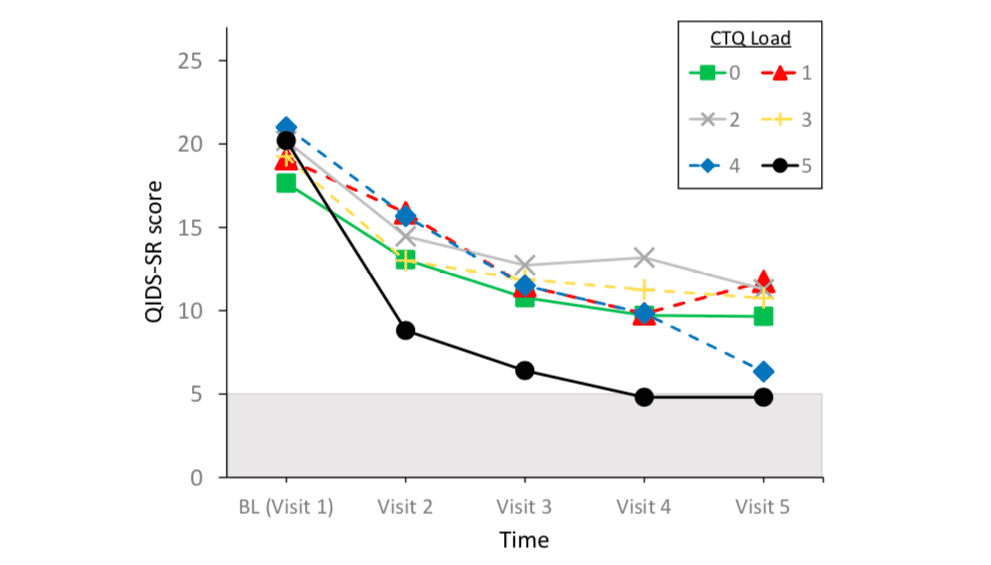
Childhood trauma, to an even greater extent than trauma occurring as an adult, makes depression and anxiety disorders much more likely. It makes depression and anxiety much harder to treat and more resistant to therapy and medications. However, this study shows that, contrary to traditional treatments, the patients with high childhood trauma scores respond even more quickly and more dramatically to ketamine than the patients without childhood trauma. This is very similar to ketamine’s effect on patients with PTSD from adult trauma – who respond very quickly and effectively to ketamine infusions.
From the paper:
“Clinically significant childhood sexual abuse, physical abuse, and cumulative clinically significant maltreatment on multiple domains (maltreatment load) were associated with better treatment response to a single and repeated infusions. After repeated infusions, higher load was also associated with a higher remission rate. In contrast to conventional antidepressants, ketamine could be more effective in TRD patients with more childhood trauma burden, perhaps due to ketamine’s proposed ability to block trauma-associated behavioral sensitization. “
Ketamine works well for many patients, but it is great to know that it can work particularly well for patients with some of the hardest treatment-resistant symptoms.
We continue to work closely with our research partners at Baylor College of Medicine to examine and publish research like this, and to improve our practice. We strive to provide the best possible evidence-based medicine.
THE STUDY:
An Important Disclaimer: The information in this and other blog posts represents our informed opinion or the opinion of others, and does not constitute medical advice and should not be relied upon to make decisions regarding medical care. To address the specific details of your medical conditions and treatments please speak with your doctors.