
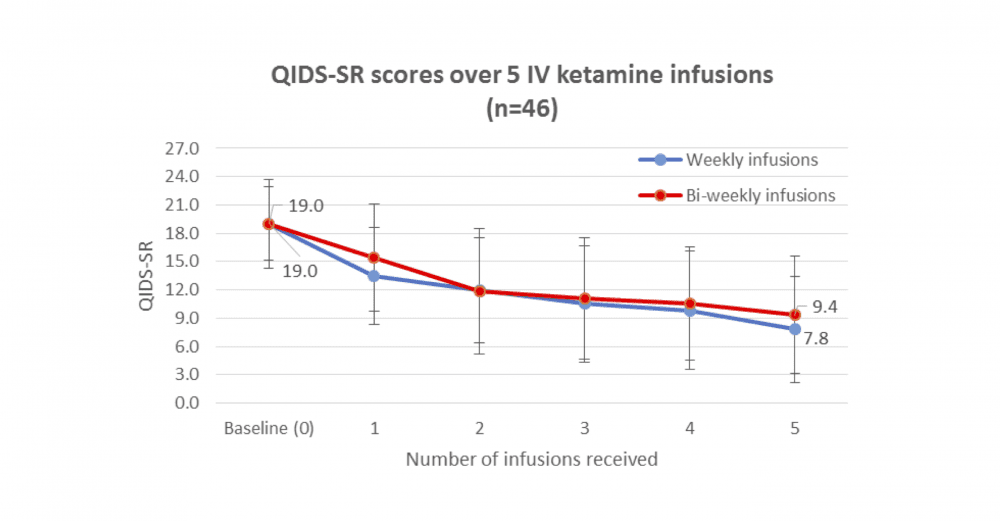
For treating depression with ketamine infusions: This study reviewing our results shows an overall response rate above 70% for patients who receive an initial series of treatments either once a week or twice a week.
PDF: The Effect of Ketamine Infusion Treatment Schedule on Depression Severity
YOUR SCHEDULE OF TREATMENTS:
This detailed look at our results shows a significant reduction in depression scores for patients. And it demonstrates that patients who receive an initial series of treatments on weekly or twice-a-week schedules see comparable results over the same number of treatments – meaning that you can see the same results faster if you space treatments closer together but can expect to see the same results eventually regardless.
We typically see patients for the treatment of depression either once a week or twice a week for an initial series of ketamine treatments. Work schedules, travel requirements, or other factors often compel the once-a-week schedule.
This analysis is consistent with our understanding of other research, and what we’d seen in the clinic. It’s excellent to have a thorough review of the data which concludes no difference between these two frequencies of visits. This is good information for those who are compelled to receive treatments once a week for an initial series.
YOUR RESPONSE TO TREATMENTS:
A response rate over 70% is great!
This response is consistent with many studies, except that our patients are widely dispersed in age, and concurrent medications, and diagnoses, and other characteristics. In other words, it appears that we are able to achieve an excellent response rate in the ‘naturalistic’ setting for our patients without the typically restrictive requirements of a research study.
We do not yet know what distinguishes someone who will respond and someone who will not respond to treatments. We suspect that one significant factor is likely whether a patient takes benzodiazepines or regularly consumes a moderate or greater amount of alcohol. Researchers on this subject have also hypothesized that there may be some genetic component to whether a patient responds to treatment or not.
TOWARDS THE BEST-POSSIBLE MEDICINE:
This study reviews our anonymized data from Lone Star Infusion shared with Dr. O’Brien, Dr. Mathew, Dr. Lijffift and Ms. Davis with Baylor College of Medicine and the Michael E. Debakey VA Medical Center with whom we collaborate. We strive to provide the best possible medicine including using – and contributing to – research. This collaboration and this study are a result of that effort to do the best we can, as well as contribute to the medical community for the benefit of patients.
THE STUDY:
PDF: The Effect of Ketamine Infusion Treatment Schedule on Depression Severity
An Important Disclaimer: The information in this and other blog posts represents our informed opinion or the opinion of others, and does not constitute medical advice and should not be relied upon to make decisions regarding medical care. To address the specific details of your medical conditions and treatments please speak with your doctors.